What Molokini actually is
Molokini is the partially submerged rim of a volcanic crater — a small, crescent-shaped islet rising out of the ʻAlalākeiki Channel between Maui and Kahoʻolawe, roughly 3 miles off Mākena in South Maui. Only the crater's southern rim stays above water; the northern side long ago sank beneath the surface, which is exactly what makes the inside of the crescent a sheltered, sand-bottomed bay while the open ocean works on the outside.
That geography earned it two layers of protection. Above the waterline, Molokini is a Hawaiʻi state seabird sanctuary — wedge-tailed shearwaters nest in burrows in the crater walls, and landing on the islet is prohibited. Below the waterline, it's the Molokini Shoal Marine Life Conservation District (MLCD), one of Hawaiʻi's most strictly protected reefs: no fishing in the main zone, no fish feeding, no taking anything. Everybody visits the same way — by boat, anchoring on moorings inside the crescent. There is no beach, no dock, no landing. The crater is a place you float in, not a place you stand on.
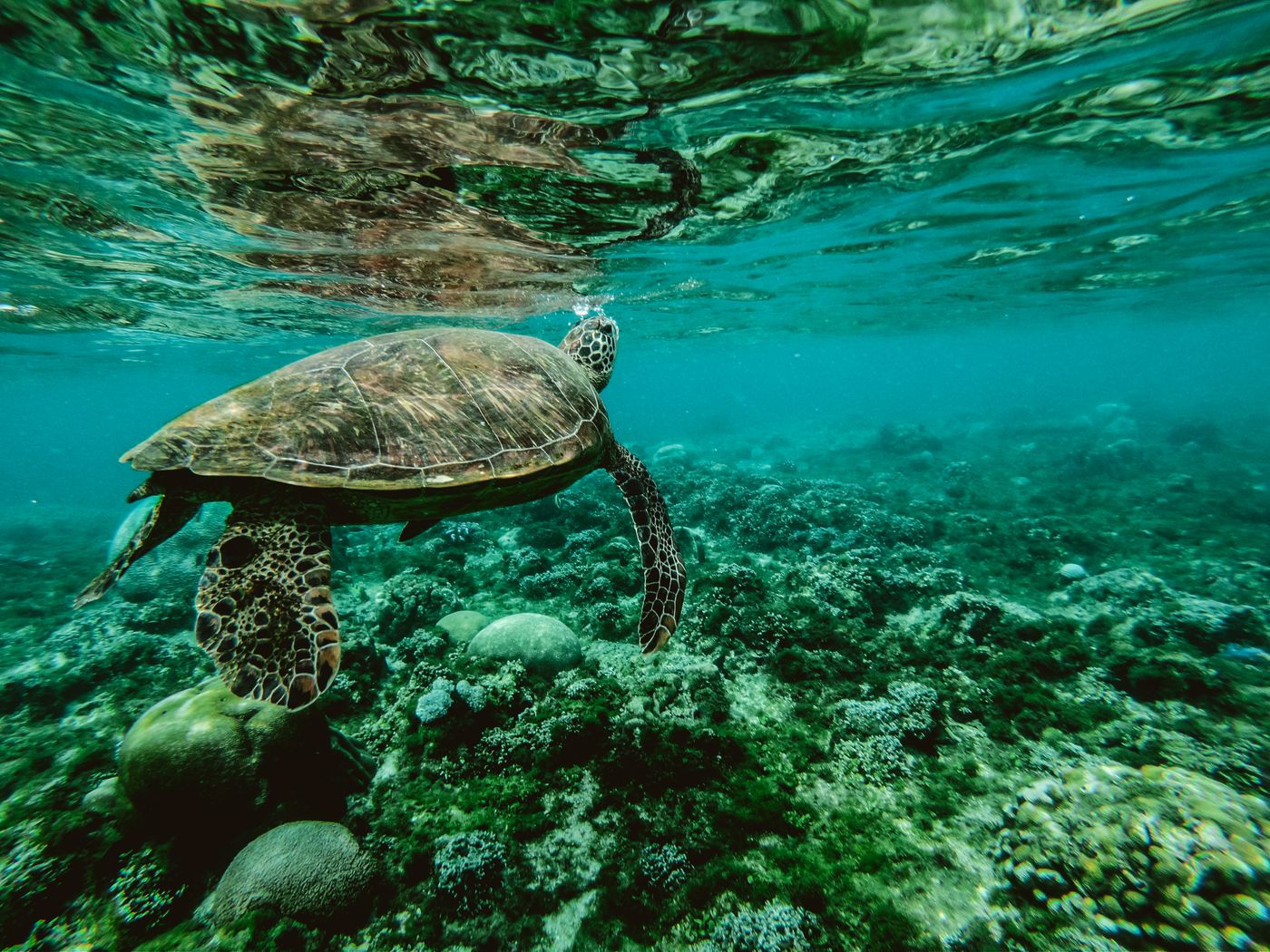
The payoff for all that protection: visibility that routinely exceeds 100 feet, around 250 species of fish, hard-coral gardens that have grown unbothered for decades, and regular appearances by turtles, white-tip reef sharks, eagle rays, and manta rays. Divers get the other side of the coin too — the crater's outer Back Wall, a sheer drop of roughly 350 feet into open ocean, ranked among the great wall dives anywhere.
Snorkeling the crater
Why the inside crescent snorkels like an aquarium — and the zones boats use.
The Back Wall & diving
A 350-foot wall, blue-water drift diving, and who it's really for.
Marine life
250 fish species, turtles, reef sharks, mantas — and the birds above.
Tours & departures
Maalaea Harbor catamarans vs. Kihei Boat Ramp rafts, honestly compared.
When to go & conditions
The morning rule, the trade-wind funnel, and the seasons.
Where to stay
There's no lodging on a crater — Kihei, Wailea & Māʻalaea are your bases.
Day trips & combos
Molokini + Turtle Town, back-wall snorkeling, and how to build the day.
Practical Molokini
Check-ins, seasickness, sunscreen law, and the sanctuary rules.
The classic first trip
Molokini & Turtle Town snorkeling adventure
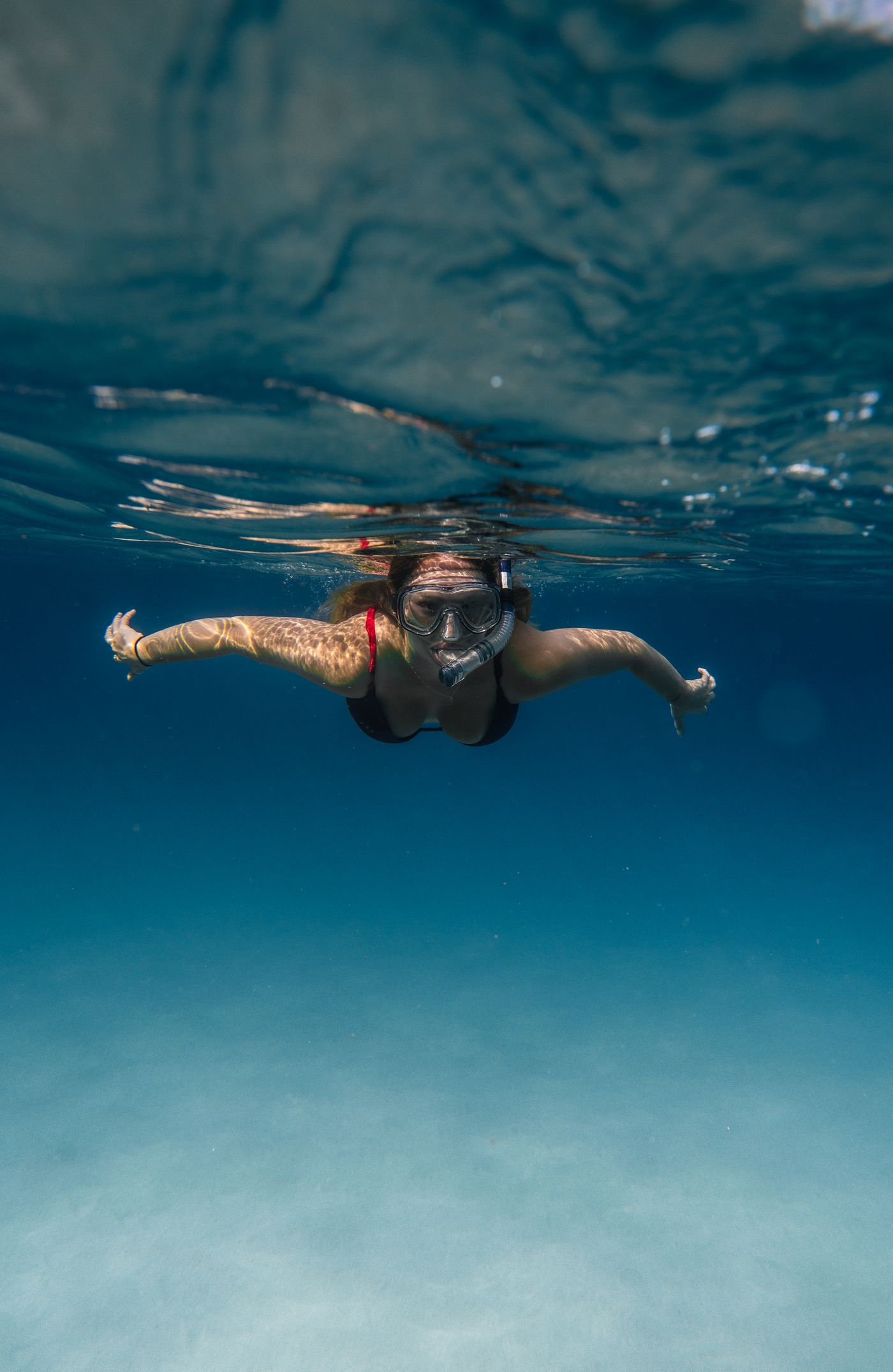
The canonical Molokini morning: a big, stable sailing catamaran out of Maalaea Harbor, a long snorkel inside the crater, then a second stop at Turtle Town off the Mākena coast for the turtles. It runs about five hours with food and gear aboard, it's the gentlest ride across the channel, and it's the right default for first-timers, mixed groups, and anyone whose stomach prefers a hull with some size to it.
Check dates & book on ViatorOne crater, one website
Molokini.us exists because every Molokini question is oddly specific — which harbor, which boat style, why dawn, what the wind does at noon, whether the Back Wall is really as serious as it sounds. The big travel sites answer those in a paragraph each. We gave them a site. Molokini.us is part of a family of single-place Maui guides: Maalaea.us covers the harbor most Molokini boats leave from, Kihei.us covers the South Maui beach town beside the raft ramp, and Kaanapali.us and Kapalua.us cover the West Maui resort coast. Each links to the others where a trip naturally spans them.
First-timer's short version: book the earliest departure, early in your trip (so weather leaves you a re-book day), from whichever departure point is closest to where you're sleeping. The when-to-go page explains why mornings own this crater.