Home → Marine life
Marine life
A reef left alone becomes a census: roughly 250 fish species live in and around Molokini's crater, alongside turtles, sharks, rays, and — overhead — one of Hawaiʻi's protected seabird colonies. Who's who, and where to look.
The reef fish
Hawaiʻi's isolation means a striking share of its reef fish are endemics — species found nowhere else on Earth — and Molokini's unfished reef is one of the best places to see them at natural densities. Regulars on any morning snorkel: clouds of yellow tang, Moorish idols, convict tangs grazing in herds, parrotfish audibly crunching coral, butterflyfish in a dozen patterns, and Hawaiʻi's state fish, the humuhumunukunukuāpuaʻa (reef triggerfish) — worth learning to pronounce before you go: hoo-moo-hoo-moo-noo-koo-noo-koo-ah-poo-AH-ah. Deeper and at the reef's edges: trevally (ulua), goatfish working the sand, moray eels in the rockwork, and octopus on the coral heads if your eyes are patient.
The headliners
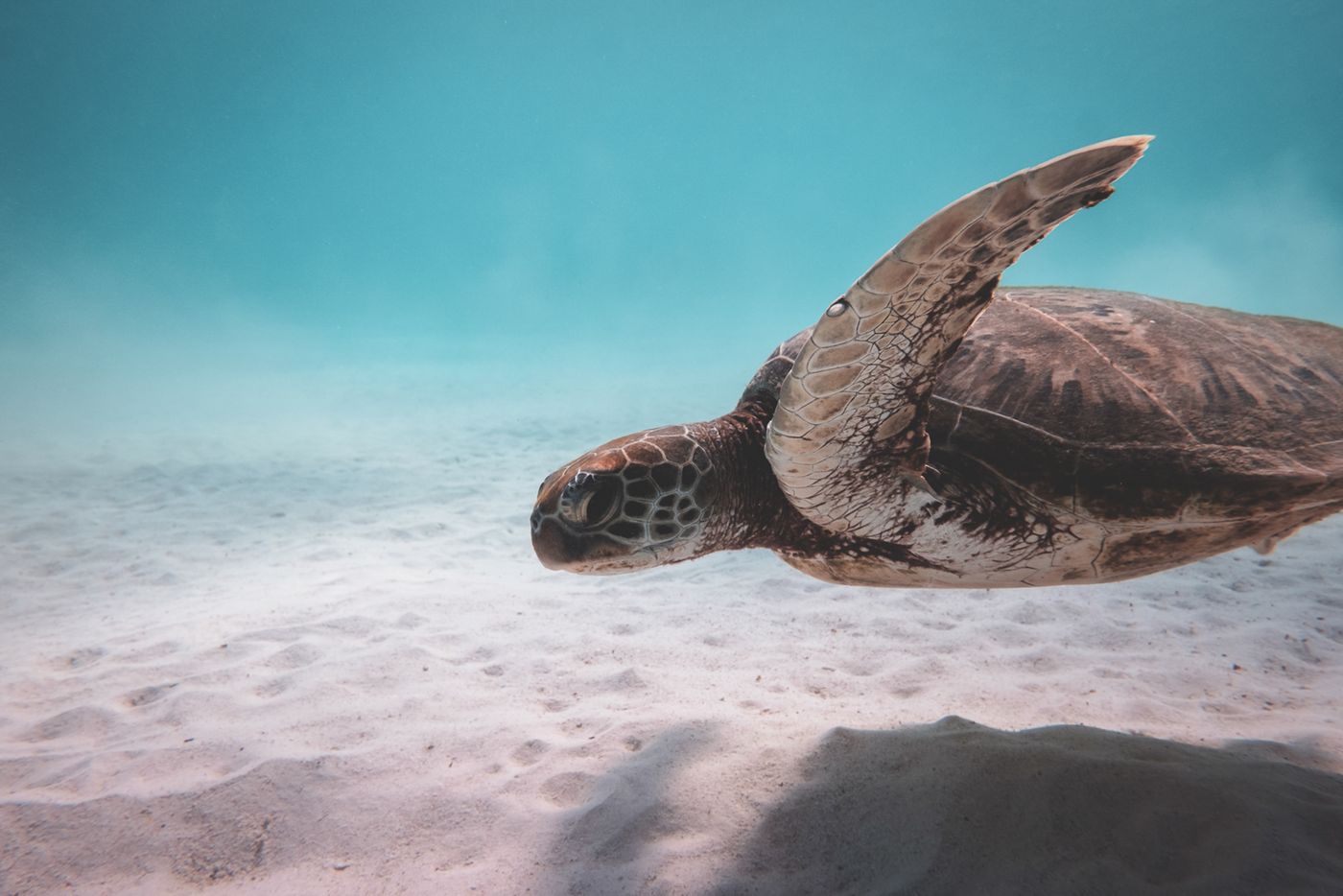
- Green sea turtles (honu). Present most mornings — resting on the sand, getting cleaned at stations on the reef, or surfacing beside the boats. Protected; watch from a distance and let them come to you.
- White-tip reef sharks. Molokini's resident sharks, usually seen resting under ledges or cruising the deeper edges. Shy, small, and a genuine thrill precisely because the reef is healthy enough to hold them.
- Spotted eagle rays & manta rays. Eagle rays work the sand flats; mantas pass the crater's points and the Back Wall — never guaranteed, never forgotten when it happens.
- Hawaiian monk seals. Occasional, special visitors — one of the rarest marine mammals on Earth. If one hauls out near your boat, the crew will give it a wide berth; do the same.
- Humpback whales (winter). Not in the crater — in the channel around it. December through April, the ride out and back is a whale watch in itself, and on calm mornings you can hear them singing through the hull while you snorkel.
Above the waterline
The part of the sanctuary most visitors never think about is the islet itself: a state seabird sanctuary where wedge-tailed shearwaters nest in burrows across the crater's slopes, returning at dusk in streaming flocks. Great frigatebirds ride the thermals over the rim. It's why landing is prohibited and why the boats keep the day's noise at the waterline — the crater is a nursery on top and a nursery below.
Why it's this alive: the Molokini Shoal MLCD has restricted fishing since the district was established, and feeding fish is banned outright — animals here behave like wildlife, not pets. Everything on this page stays true only as long as every visitor follows the sanctuary rules.