Home → Snorkeling the crater
Snorkeling the crater
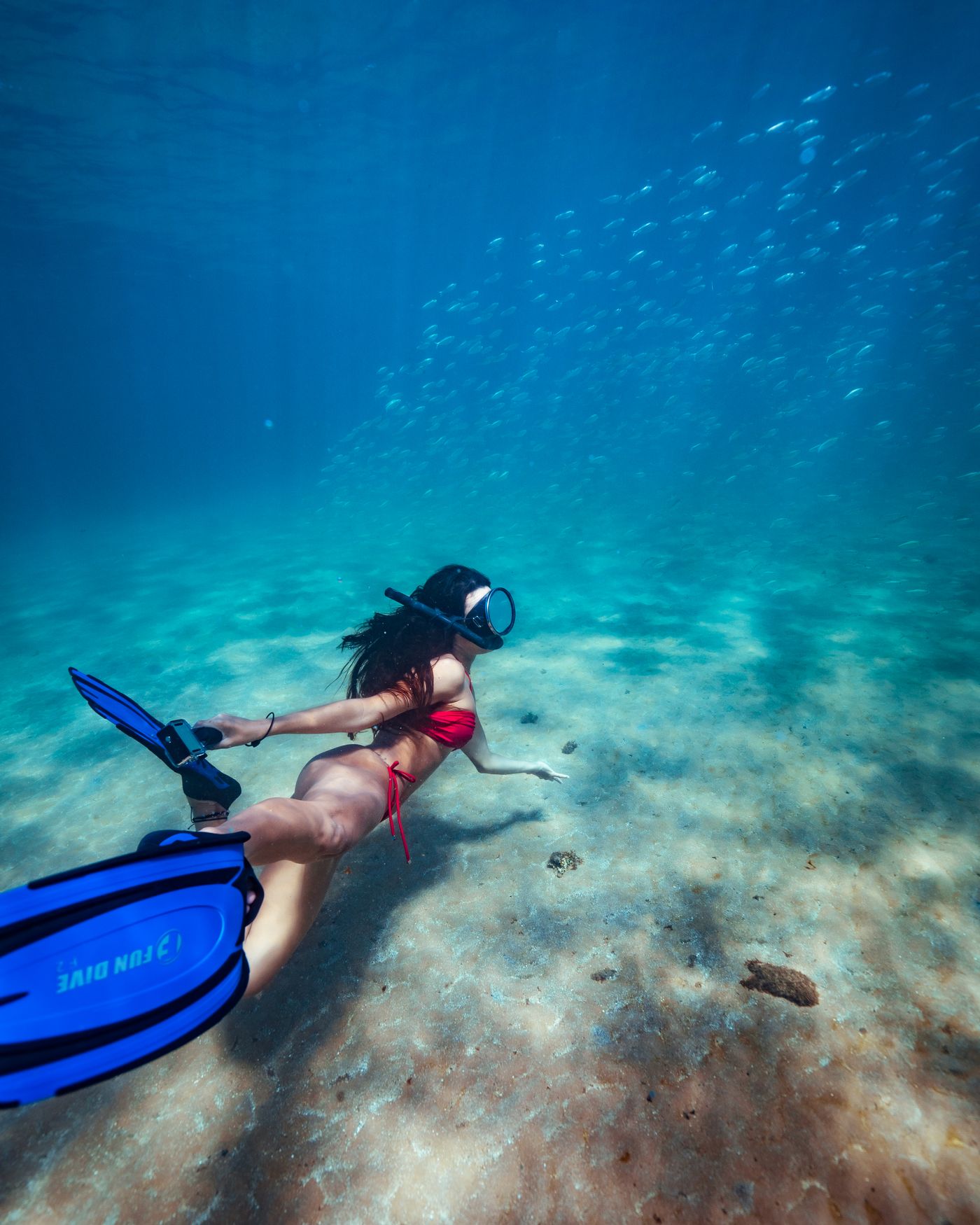
Snorkeling Molokini is floating in a natural aquarium: a sheltered, sand-bottomed crescent with visibility that can pass 100 feet, coral gardens in 10 to 40 feet of water, and fish that have never been fished at and largely ignore you. Here's how it works.
Why the crater snorkels so well
Three things combine. Shelter: the crescent's arms block the prevailing swell and wind chop, so the inside stays calm on mornings when exposed reefs are murky. No runoff: Molokini sits miles offshore with no streams, roads, or shoreline development anywhere near it — nothing washes in to cloud the water, which is why the clarity is famous. Protection: as a Marine Life Conservation District, the reef has been off-limits to fishing and feeding for decades, so the fish are numerous, big, and calm. You are not chasing wildlife here; you're drifting through it.
The zones your boat will use
- The center bowl. The middle of the crescent: sand flats around 30–40 feet deep with coral heads scattered through, the classic first snorkel — turtles cruise here, and schools of fish hang over the coral.
- The inner wall. Along the crater's inside rim, the reef slopes up the rock face; this is where the coral gardens and the densest reef-fish life are, in water shallow enough to see everything from the surface.
- Reef's End. Toward the crescent's eastern tip, where the reef runs out toward deeper water — a favorite for experienced snorkelers and freedivers, with bigger fish and occasional rays and reef sharks passing the point.
Your captain picks the day's spots by wind and swell, and every boat ties to an assigned mooring — anchoring on the reef itself isn't allowed. Expect the crew to set a swim boundary; the MLCD rules (no feeding, no touching, no standing on coral) are briefed on the ride out and covered in full on our practical page.
Two verified ways to snorkel it
Pacific Whale Foundation — Molokini & Turtle Arches
The conservation-first option: a double-deck catamaran with certified marine naturalists aboard, a snorkel 101 for beginners, and a second stop at Turtle Arches off the Mākena coast. If you want to know what you're looking at — and with 250 species down there, there's a lot — this is the boat that teaches it. Around five hours, gear and food included.
Check dates & book on ViatorCalypso — Molokini snorkeling adventure
The triple-decker with the water slide, glass-bottom viewing room, and room to spread out — the most amenity-loaded way to do the crater, and a genuinely good pick for groups with kids or non-swimmers who still want to see the reef. Molokini plus a Turtle Town stop, around five and a half hours, meals aboard.
Check dates & book on ViatorPrefer a small boat and a faster ride? The rafts out of the Kihei Boat Ramp are the crater's other tradition — compared side by side on the tours page, and paired with Turtle Town on the day-trips page.
Snorkel etiquette at a sanctuary
- Never feed the fish — it's illegal in the MLCD and it changes animal behavior for every visitor after you.
- Look, don't touch — coral is a living animal a thin skin thick; a fingertip or a fin kick does real damage. Never stand on it.
- Give turtles and seals space — honu and monk seals are protected; watch from a respectful distance and never chase.
- Reef-safe sunscreen only — Hawaiʻi law bans the sale of sunscreens with oxybenzone and octinoxate; apply before you board so it sets (better for you, better for the reef).